Global manufacturers are embracing AI-driven capabilities in their operations, augmenting human labor and decision making to drive productivity and resilience amidst increasingly frequent market and supply chain disruptions. Now, the global market for artificial intelligence in manufacturing is expected to reach USD 9.09 billion by 2027 with a CAGR of 24.2%, Fortune Business Insights reports. These trends are characteristic of today’s Industry 5.0 manufacturing model, which emphasizes automation and analytics-driven manufacturing.
But intelligence, automation, and other elements of modern manufacturing are only part of its ongoing evolution as an industry. Increasingly, manufacturers must embrace a more sustainable, human-centric manufacturing model to remain competitive.
This “Industry 5.0” manufacturing paradigm represents the next evolutionary stage of the existing Industry 4.0 model; it continues the industry’s focus on the integration of human-machine collaboration, digital manufacturing, and data-driven decision making, with an additional focus on human-centricity, sustainability, and resilience.
This puts additional pressure on manufacturing operations leaders to develop best practices for manufacturing in an Industry 5.0 world—practices founded on a commitment to empowering the humans that will continue to be integral to manufacturing operations. “For manufacturers to attract and retain the talent they’ll need in order to grow, they must champion a future in which technologies augment and empower their human workforce… find the right balance between humans and machines,” as Forrester described in an October 2022 article.
In this article, we explore new best practices for competitive manufacturing in an Industry 5.0 world, based on insights from thought leaders in the field. We also make recommendations on how manufacturing operations leaders can get started with their transition.
01The Roles of Humans in Manufacturing Continue to Evolve
Manufacturing robotics and intelligence in the form of automation began within the Industry 3.0 paradigm during the late 20th Century. Humans were liberated from the repetitive tasks of hammering, binding, and bending, and others associated with widely accepted best practices in mass production.
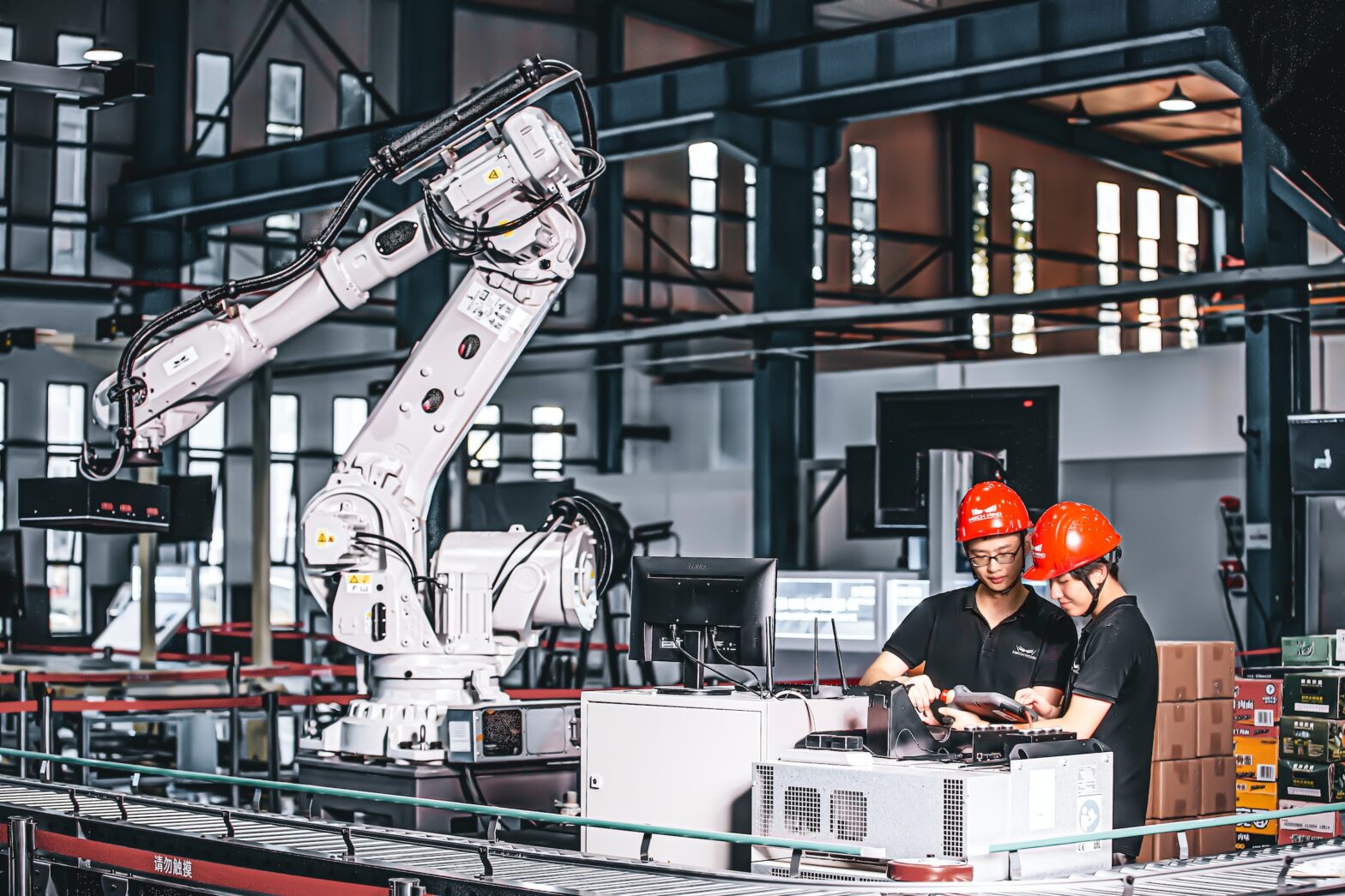
But it wasn’t until Industry 4.0 that machines “began to augment people’s brains,” as Forrester described in a November 2022 article. Today, manufacturing robots and intelligent systems support human decision-making in integrated environments featuring IoT sensors, analytics, and user-friendly dashboards even non-technical users can access and understand. Manufacturing operations can now leverage the insights of both machines—via automation, connectivity, and analytics—and humans—via analysis and labor that acts on those insights.
As industry leaders step towards an Industry 5.0 environment, human labor will continue to be integral even as automation and analytics-driven technologies proliferate. The roles of humans will evolve to focus on value-adding activities, such as complex problem-solving, creativity in product design and innovation, decision-making based on data insights, and leading teams from a strategic, forward-thinking standpoint.
02What is Industry 5.0?
In many ways, Industry 5.0 is simply the natural and continued progression of priorities, themes, strategies, and technologies associated with Industry 4.0 manufacturing. “Industry 5.0 is about augmenting that digital transformation [of Industry 4.0] with a more meaningful and efficient collaboration between humans and the machines and systems within their digital ecosystem,” as SAP describes. “The partnership of humans and smart machines marries the accuracy and speed of industrial automation with the creativity, innovation, and critical thinking skills of humans.”
With this in mind, Industry 5.0 is still “underpinned” by the nine critical “pillars” of Industry 4.0, as defined by SAP:
- Additive manufacturing
- Augmented reality
- Autonomous robots
- Big Data and analytics
- Cloud connectivity
- Cybersecurity
- Horizontal and vertical system integration
- The Internet of Things (IoT)
- Simulation and digital twins
On the other hand, the Industry 5.0 paradigm puts increased emphasis on human-centric and sustainably-focused initiatives, including:
- improving collaboration between employees, customers, and machines, especially with a focus on improving experiences for humans
- supporting sustainable manufacturing, such as leveraging automated processes that reduce waste and pollution
- designing manufacturing systems with a focus on responsible resourcing to ensure safety and quality throughout manufacturing processes
- enabling self-learning capabilities through predictive analytics, machine learning, artificial intelligence (AI), and automation
- prioritizing data-driven human decision making to ensure manufacturing processes remain efficient, cost-effective, and agile
The European Commission sums up Industry 5.0 with a broader, more holistic definition of its core purpose: “It places the wellbeing of the worker at the center of the production process and uses new technologies to provide prosperity beyond jobs and growth while respecting the production limits of the planet.”
035 Best Practices for Manufacturers Transitioning to an Industry 5.0 Model
Considering these Industry 5.0 elements, manufacturing operations leaders must prepare their teams for a future of augmented human labor and decision making alongside broader, global initiatives to stay competitive. The following best practices can help manufacturing operations leaders realize the benefits of Industry 5.0 among their teams and stakeholders.
04Prioritize employee upskilling.
“The partnership of humans and smart machines marries the accuracy and speed of industrial automation with the creativity, innovation, and critical thinking skills of humans,” as SAP describes. As manufacturing roles become increasingly sophisticated, employees must be upskilled to remain relevant and add value to any company.
Operations leaders should invest in quality training and professional development to ensure their workforces are equipped with the right skills, mindsets, and capabilities needed to support Industry 5.0 manufacturing. Training resources may include virtual and in-person training, individual coaching, on-the-job learning opportunities, and blended learning with a combination of digital and physical training materials.
05Create an environment of trust.
As manufacturing becomes increasingly complex and interconnected, it is essential for manufacturing personnel to foster a culture of trust between teams, machines, processes, and customers. “Trust is of course an essential human value and will be a necessary component to ensure a truly human-centric Industry 5.0 vision,” as CPO Magazine describes.
This applies to trust in machines to remain productive and keep humans out of harm’s way; but also, trust in data, processes, and new information associated with Industry 5.0 initiatives. Naturally, trust applies in terms of data security as well: “These systems can collect potentially sensitive data on workers [and others] so trust that this data will be handled securely will be key.”
06Leverage insights from a variety of data.
Data has become a critical asset in manufacturing operations, and when used properly, can offer valuable insights that can drive operational value in terms of next-generation Industry 5.0 initiatives. SAP identifies “leveraging AI for advanced data management and analysis systems” as a foundational Industry 4.0 technique for “strengthening collaboration between humans and robots.”
Operations leaders can invest in solutions that gather, analyze, and interpret data so teams are empowered with the right information to make decisions quickly and accurately. \Additionally, manufacturing operations leaders can explore predictive analytics and AI-driven insights to better understand customer needs, anticipate risks, and optimize manufacturing processes for sustainability and resilience.
07Prioritize sustainability.
Manufacturers are increasingly embracing sustainable manufacturing practices to reduce their environmental impacts, such as waste production and energy consumption. Sustainable manufacturing can also help manufacturing operations save money in the long run by reducing costs associated with raw materials, energy, and water.
Manufacturing operations leaders should prioritize resources for initiatives that reduce waste, reduce energy consumption, and utilize renewable resources. Additionally, operations leaders should explore options for digital manufacturing to further reduce the environmental impact of manufacturing operations. The best solutions will be cost-effective and drive bottom-line value in addition to reducing manufacturers’ environmental impact.
08Foster an agile approach.
In this new manufacturing environment, manufacturing leaders must embrace agility within their operations. Establish an iterative and flexible manufacturing approach to enable teams to respond quickly and efficiently to market disruptions, changing customer demands, and new technologies.
The ability to quickly pivot manufacturing operations can help manufacturing personnel stay competitive, anticipate potential issues, and deliver quality products. Invest in agile manufacturing techniques such as rapid prototyping, 3D printing, and modular design to enable manufacturing teams to iterate faster and take a holistic view of the manufacturing process.
09Building On Your Industry 4.0 Foundation
Modern manufacturers who have made progress with Industry 4.0 technologies and best practices can use their existing foundation to build a human-centric manufacturing model for Industry 5.0 success. By embracing these best practices, manufacturing operations leaders can ensure their workforce and their organizations remain competitive and become well-positioned to capitalize on new growth opportunities.
10Semifly Can Help with Your Industry 5.0 Transformation
Semifly is a leading technology partner and provider to manufacturers transitioning to Industry 5.0 manufacturing models. Our suite of services and solutions is tailored to the needs of modern manufacturers, empowering them with the right tools to capitalize on Industry 5.0 trends and technologies. Contact us today to get started on your manufacturing transformation journey.
← Back to Insights