

• FEATURED STORY OF THE WEEK

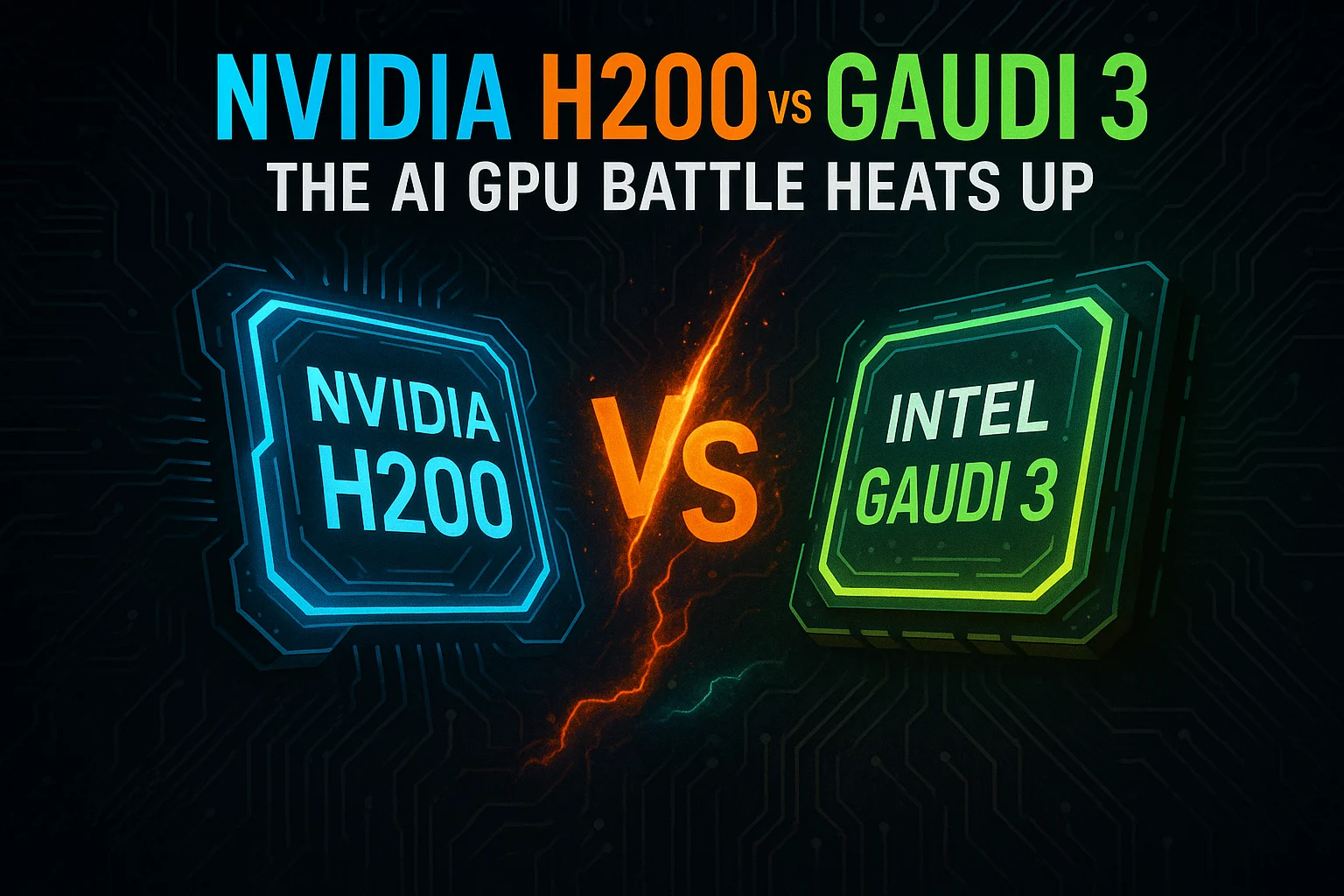
      NVIDIA H200 vs Gaudi 3: The AI GPU Battle Heats Up

      Written by :  
      semifly
      Team Semifly
      11 minute read
      August 1, 2025
      Category : Datacenter
      NVIDIA H200 vs Gaudi 3: The AI GPU Battle Heats Up
      Bookmark me
      Share on
      Comments
      Add your Comment

      Writing About AI

      Semifly

      is an engineer and a technologist with a diverse background spanning software, hardware, aerospace, defense, and cybersecurity. As CTO at Semifly, he leverages his extensive experience to lead the company’s technological innovation and development.

      Explore Nvidia’s GPUs

      Find a perfect GPU for your company etc etc
      Go to Shop

      FAQs

      • The NVIDIA H200 is an upgrade of NVIDIA’s Hopper architecture, featuring a substantial 141 GB of HBM3e memory with a bandwidth of 4.8 TB/s. It is manufactured using TSMC’s 4nm process and has a high Thermal Design Power (TDP) of 700W. In contrast, the Intel Gaudi 3 uses a custom architecture, including 96 MB of on-chip SRAM and 128 GB of HBM2e memory, providing 3.7 TB/s bandwidth. It is built on a 5nm TSMC process and has a lower TDP of 600W. The H200 prioritises memory bandwidth, whereas the Gaudi 3 focuses on integrated SRAM and software optimisations for efficient AI workload processing.

      • For training large AI models like Llama 70B, the NVIDIA H200 excels due to its superior HBM3e memory bandwidth, which allows for faster data processing and reduces bottlenecks. The Intel Gaudi 3 also offers strong training performance, with Intel claiming it trains Llama 70B models 1.7 times faster than the NVIDIA H100 (H200’s predecessor), partly by using FP8 precision.


        In terms of inference, the NVIDIA H200 is strong in memory-bound tasks requiring large data batches due to its higher memory bandwidth. The Intel Gaudi 3, with its eight dedicated Matrix Math Engines, is optimised for complex matrix multiplications central to transformer models, leading to claims of being 1.3 times faster than the H200 in certain inference tasks. The overall performance depends on the specific AI task and model architecture.

      • The NVIDIA H200 has a higher TDP of 700W, demanding advanced and potentially more costly cooling solutions. Its focus is on maximum raw performance, even at the expense of higher energy consumption per operation. The Intel Gaudi 3 operates at a lower 600W TDP, making it easier and cheaper to cool, often allowing for standard air cooling. The Gaudi 3 prioritises performance-per-watt, aiming to achieve more AI tasks per kilowatt-hour of electricity, making it appealing for cost-conscious or eco-focused deployments. For scalability in large clusters, the Gaudi 3’s lower TDP allows for denser packing of accelerators in server racks without exceeding power or cooling limits.

      • NVIDIA holds a significant advantage with its mature CUDA ecosystem, a programming platform deeply integrated with major AI frameworks like PyTorch and TensorFlow. CUDA’s extensive documentation, polished tools like TensorRT, and a large developer community drastically reduce development time and risk for existing AI projects.


        Intel Gaudi 3 relies on its Habana SynapseAI software suite, which supports popular frameworks but is less mature than CUDA. A major challenge for Gaudi 3 is the effort required to migrate existing AI code written for NVIDIA GPUs, as SynapseAI does not directly run CUDA code. While this presents a learning curve and potential delays, Intel’s aggressive pricing strategy aims to offset this, offering significant hardware cost savings for organisations willing to adapt their code.

      • The NVIDIA H200 is positioned as a premium product with an estimated starting price well above $40,000 per unit, similar to its predecessor. It has begun shipping in limited quantities, but supply is constrained, potentially leading to delays.


        In contrast, the Intel Gaudi 3 is expected to be significantly cheaper, with industry estimates suggesting it could cost 30% to 40% less than the H100. Volume availability for the Gaudi 3 is anticipated in the second half of 2025, with Intel partnering with major server builders to broaden its reach.

      • The Intel Gaudi 3 offers a more attractive Total Cost of Ownership (TCO) due to its significantly lower estimated purchase price and slightly reduced power draw (600W vs 700W). This makes it highly appealing for budget-sensitive or large-scale deployments where numerous GPU units are required, especially for workloads where its performance is competitive.


        The NVIDIA H200, despite its higher upfront cost, delivers unmatched performance for memory-intensive tasks and training massive AI models. For projects where absolute speed and the ability to handle huge datasets are paramount, the H200’s premium can be justified, offering superior capability per GPU in these specific scenarios.

      • The NVIDIA H200 is the top choice for training the largest language models and handling memory-intensive research tasks, particularly where achieving the fastest possible training times for frontier AI models is critical and budget is a secondary concern. Its 141 GB HBM3e memory and 4.8 TB/s bandwidth make it ideal for such demands.


        The Intel Gaudi 3 is better suited for organisations building large-scale inference clusters or those needing to balance performance with tight budgets. Its lower cost and competitive performance in key workloads like BERT, combined with efficient inference capabilities, make its price-to-performance ratio highly attractive for practical deployments.

      • The intense competition between NVIDIA and Intel signifies a significant heating up of the AI accelerator battle. Intel is aggressively challenging NVIDIA’s long-standing dominance by offering the Gaudi 3 as a compelling value proposition against NVIDIA’s higher-priced H200. Meanwhile, NVIDIA continues to push the boundaries of memory technology and peak performance with innovations like HBM3e. This rivalry is expected to lead to the development of more powerful and accessible options for AI developers in the coming years, fostering innovation and potentially driving down costs across the industry.

      More Similar Insights and Thought leadership

      Zero-Trust Security Implementation: How Managed Services Turn Strategy into Continuous Protection

      Zero-Trust Security Implementation: How Managed Services Turn Strategy into Continuous Protection

      Zero-trust security replaces obsolete perimeter defenses with a model that assumes breach and mandates explicit verification for every access request, regardless of location,,. Unlike static…
      14 minute read
      Energy and Utilities
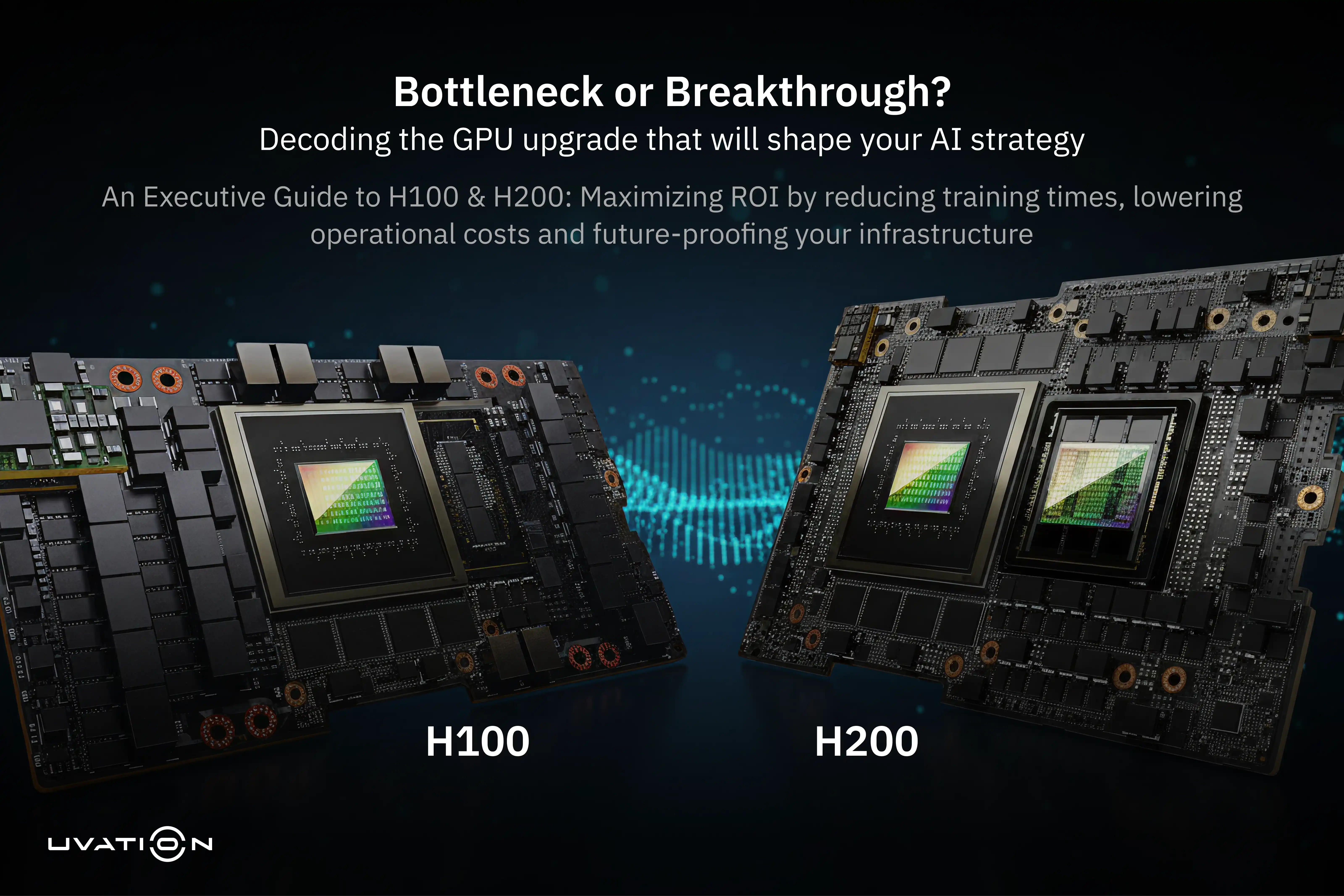
      H100 vs H200 Performance Comparison: Decoding the GPU Upgrade That Will Shape Enterprise AI

      H100 vs H200 Performance Comparison: Decoding the GPU Upgrade That Will Shape Enterprise AI

      The NVIDIA H200 GPU enhances the H100, sharing the same Hopper architecture but targeting performance bottlenecks in large-scale AI. The key upgrade is its memory…
      10 minute read
      Energy and Utilities
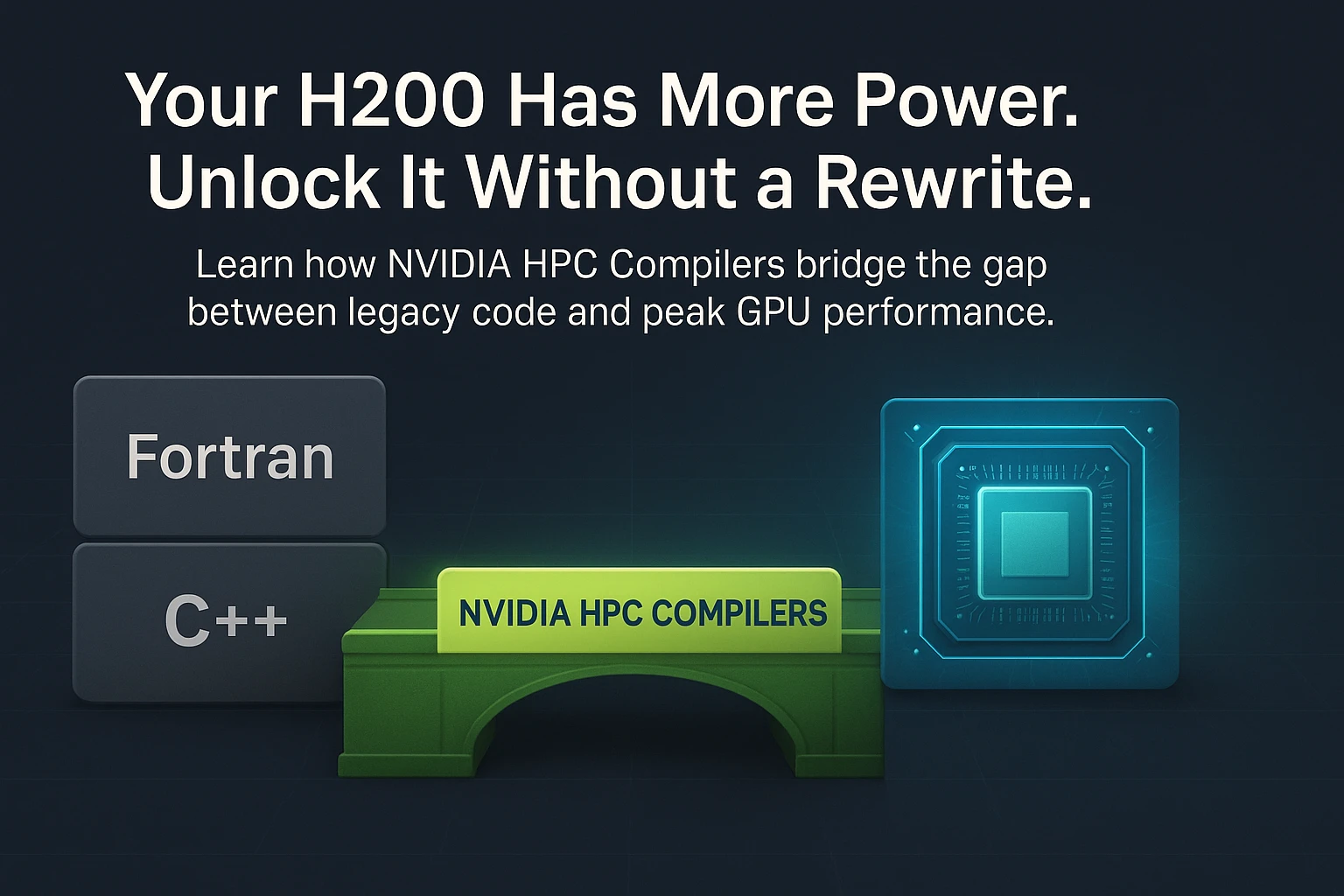
      Accelerating Workflows with NVIDIA HPC Compilers: Unlocking Performance on NVIDIA H200 GPUs

      Accelerating Workflows with NVIDIA HPC Compilers: Unlocking Performance on NVIDIA H200 GPUs

      The NVIDIA HPC Compiler stack is essential for bridging the gap between the raw power of hardware like the NVIDIA H200 GPU and real-world application…
      18 minute read
      Energy and Utilities
      NVIDIA H200 Regulatory Approvals: Ensuring Safe and Compliant AI and HPC Deployments 

      NVIDIA H200 Regulatory Approvals: Ensuring Safe and Compliant AI and HPC Deployments 

      The NVIDIA H200 GPU has numerous regulatory approvals, which are essential for safe, legal, and reliable deployment of AI and high-performance computing (HPC) workloads globally.…
      8 minute read
      Energy and Utilities
      GPUs in University Research: Powering the Next Era of Discovery

      GPUs in University Research: Powering the Next Era of Discovery

      Universities are increasingly adopting Graphics Processing Units (GPUs) to accelerate research in fields like medicine, climate science, and artificial intelligence, which depend on processing massive…
      14 minute read
      Energy and Utilities
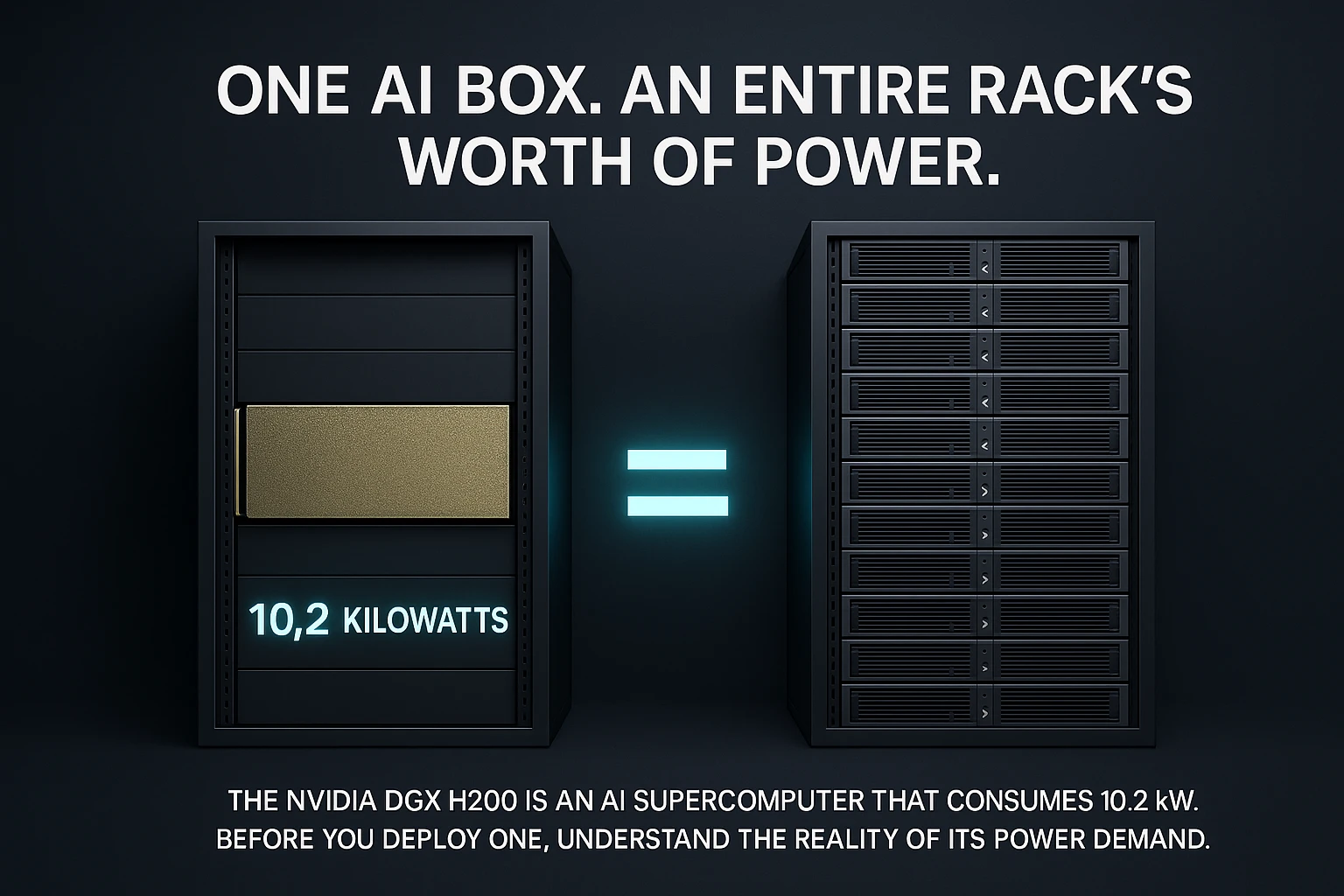
      NVIDIA DGX H200 Power Consumption: What You Absolutely Must Know

      NVIDIA DGX H200 Power Consumption: What You Absolutely Must Know

      The NVIDIA DGX H200 is a powerful, factory-built AI supercomputer designed for complex AI and research tasks. Its high performance, driven primarily by eight H200…
      14 minute read
      Energy and Utilities
      semifly